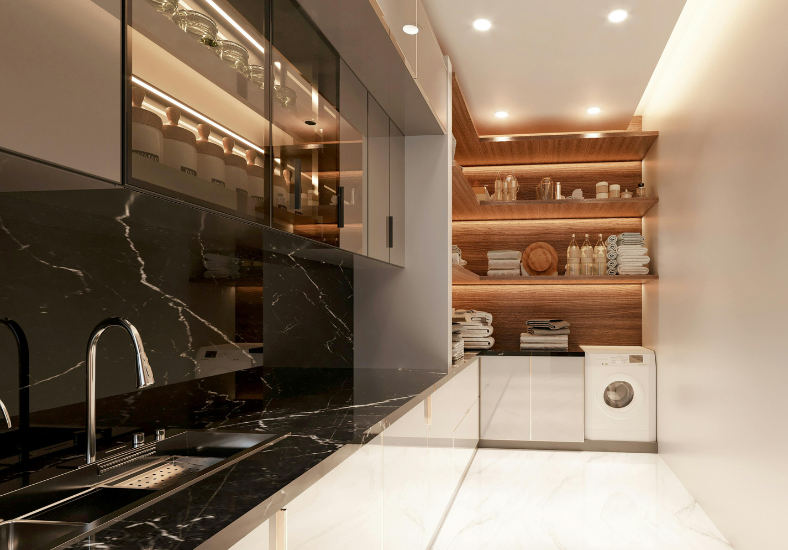
A new kitchen is a big investment. The finishes, fittings and layout are chosen with care, and you expect them to last. What many homeowners do not realise is that a poorly planned laundry — especially one near the kitchen — can quietly eat away at that investment over time.
Steam, leaks and constant damp from an inefficient laundry do not stay in one place. Moist air moves, especially in open-plan or semi-open layouts, and it can drift straight into your kitchen cabinetry and kitchen cabinets. Chemicals, spills and extra wear around shared walkways all add to the problem. At Cutting Edge Cabinetry, we design, manufacture and install custom cabinetry across Pukekohe, Auckland and the wider Waikato — and we see how good laundry design can protect the whole home, not just one room.
How Moisture and Steam Quietly Damage Kitchen Cabinetry
When you run a hot wash, open the washer door or pull clothes from a condenser dryer, you release warm, moist air. If that moisture has nowhere to go, it sits on surfaces and soaks into materials. Over time, this can cause:
- Swelling of board edges and door panels
- Delamination, where the surface layer peels or bubbles
- Warping of kitchen cabinet doors and benchtops so they no longer line up
Many New Zealand homes have the laundry tucked just off the kitchen, or as a nook in the same open-plan space. In cooler, wetter months, windows are often kept shut and clothes racks are set up indoors. The result is higher humidity that drifts through to the kitchen, settling on cabinet doors, kickboards and benchtops.
Moisture damage does not always shout at you. Early signs are often small and easy to miss, such as:
- Puffy or rough edges on kitchen cabinet doors
- Soft or spongy spots on benchtops near the washer or tub
- Musty smells in cupboards or around kickboards
- Dark spots or mould on silicone, grout or the bottom of panels
If you catch these early, there is a better chance of protecting both your laundry and kitchen cabinetry. Leaving it too long can lead to bigger repairs, replacement parts or full refits — costs that could have been avoided with smarter planning and the right kitchen renovation services from the start.
Smart Laundry Design Choices That Control Moisture
Good laundry design starts with moving moisture out quickly and safely. That usually means pairing strong extraction with the right layout so steam does not build up.
Key design strategies include:
- A good-quality extractor fan ducted to the outside, not just recirculating
- Dryers that are properly vented out, or modern heat-pump dryers placed in a well-ventilated area
- Allowing space around appliances so moisture is not trapped against cabinetry
- Drip trays and upstands below and behind washers to catch small leaks and splashes
Material choice also makes a big difference. In high-moisture zones, our Pukekohe-based team often recommends:
- Moisture-resistant cabinetry boards and edging
- Hard-wearing, water-resistant benchtop finishes in the laundry
- Extra sealing at cut edges, sink cut-outs and around taps
These choices help the laundry stand up to daily use, and they also reduce the amount of moisture that gets into the air and drifts toward your kitchen cabinets and cabinetry.
Storage is another key part of smart laundry design. When detergents, bleach and cleaning products are left on top of machines or on open shelves, spills are almost guaranteed. Purpose-built custom cabinetry helps keep things tidy and dry:
- Closed cupboards for chemicals and spray bottles
- Built-in soaking tubs with proper drainage — not random buckets on benchtops
- Drying rails or pull-out racks that keep wet items over easy-clean surfaces
All of this keeps damp patches and splashes under control, so they are far less likely to creep across to your kitchen area.
Space Planning That Protects Both Laundry and Kitchen
If your laundry sits near the kitchen, layout is just as important as materials. A clever plan can separate moisture and noise while keeping the space practical to use.
Some effective layout ideas include:
- Sliding or pocket doors that close off the laundry when machines are running
- Well-sealed laundry cupboards within open-plan living that contain steam and sound
- Positioning machines and sinks so they do not blow steam directly toward kitchen cabinetry
Zoning is helpful too. Think of the laundry in terms of wet and dry areas:
- Wet zone: tub, washer, any floor drains and drip trays
- Dry zone: folded clothes, cleaning tools, storage for linens and pantry overflow
Keeping these zones distinct stops wet items from creeping into dry storage or pantry areas linked to the kitchen.
Custom cabinetry and full fit-outs allow us to align the look of your laundry and kitchen while still giving each space what it needs. The finishes might match so the rooms flow together — matching your modern kitchen design — yet the hidden details, seals and layouts are adjusted to suit the heavier moisture load in the laundry. That way, your premium kitchen finishes, appliances and benchtops are less exposed to long-term damp.
Designing a Future-Ready Laundry for Busy Kiwi Homes
Households change. Machines get bigger, kids grow, sports gear and school uniforms multiply, and some homes add pet washing or muddy boot zones. All of these bring extra moisture, dirt and wear into the laundry — which can spread into nearby spaces if the design is not ready for it.
Planning for the future might include:
- Extra storage for bulk detergents, sports kits and school bags
- Dedicated cubbies or hooks for wet coats and muddy gear
- Space for a pet shower or wash tub in a controlled wet area
Durable hardware also matters. Quality hinges, drawer runners and fixings in the laundry help doors stay aligned and panels stay straight, even with heavy daily use. When laundry doors sag or twist, they can put strain on adjoining panels and benchtops — especially in shared walls or continuous cabinet runs that flow through to the kitchen.
Energy-efficient appliances and smart drying options — like ceiling-mounted racks or enclosed drying cupboards with extraction — also support better air quality. In damp or cooler conditions, these choices help clothes dry faster without turning your kitchen and living area into a steamy zone. A well-considered wardrobe design and entertainment cabinetry approach in adjacent spaces can similarly reduce the spread of moisture and wear throughout your Auckland or Waikato home.
Working With Specialists to Safeguard Your Cabinetry
Treating the laundry and kitchen as one linked project is one of the best ways to protect your cabinetry investment. When layouts, materials and ventilation are planned together, you avoid weak spots where moisture can creep from one room to the other.
At Cutting Edge Cabinetry, we focus on cohesive, whole-home cabinetry solutions. Our team designs, manufactures and installs custom cabinetry and fit-outs across Pukekohe, Auckland and the wider Waikato region. As a trusted cabinet maker and kitchen cabinet maker, we think about moisture, traffic flow and long-term wear right from the start — helping create laundries that actively protect your kitchen cabinetry, not quietly damage it.
Get Started With Your Laundry Design Project Today
If you are ready to transform your laundry into a more functional and protective space for your whole home, our team at Cutting Edge Cabinetry can guide you through every step. Explore our tailored laundry design solutions to see how we bring practical ideas to life, or browse our full range of custom cabinetry — from kitchen cabinet installation and modern kitchen design to wardrobe design and commercial fitouts across Auckland and Waikato. To discuss your project or arrange a consultation with our Pukekohe team, simply contact us today.
.png)
.png)