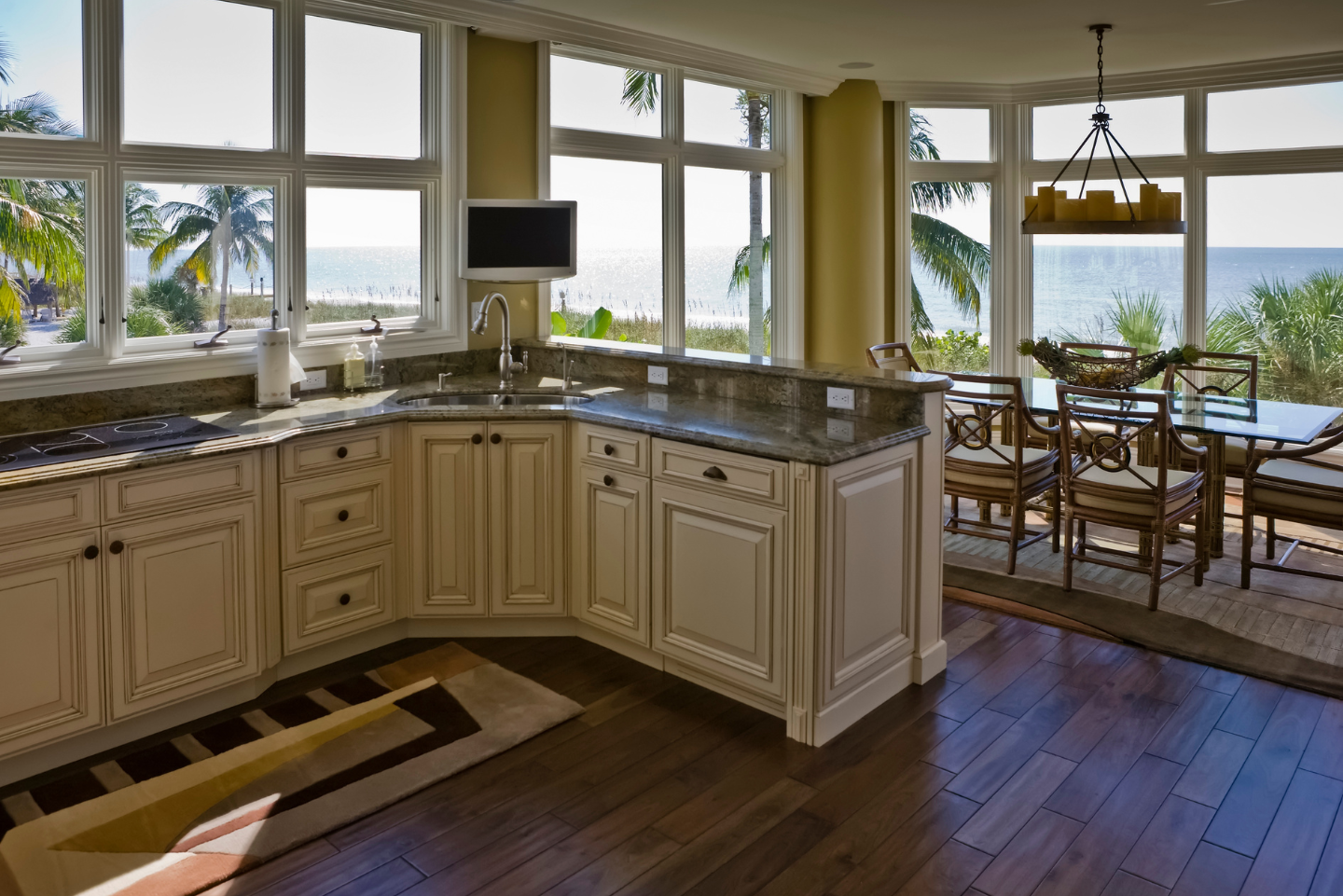
Kitchen cabinets in coastal Auckland work harder than most people think. Salty air, high humidity and quick weather changes all put extra stress on every door, drawer and hinge — especially through damp autumns and stormy winters. If your home is near the coast or exposed to strong sea breezes, your kitchen is right on the front line.
Kitchens already see a lot of moisture and heat. Steam from cooking, constant use of the oven, warm fridges and dishwashers, plus regular wiping and cleaning, all add up. When you mix that with a marine climate, the effects on your kitchen cabinets and cabinetry can be quite noticeable over time.
At Cutting Edge Cabinetry, we design, manufacture and install custom kitchen cabinets for homes across Pukekohe, Auckland and the wider Waikato. As a Pukekohe-based kitchen cabinet maker, we work in these conditions every day — and we know exactly what separates kitchen cabinetry that lasts from cabinetry that fails early. In this article we explain what actually happens to kitchen cabinets in coastal Auckland homes, why some kitchens age much faster than others, and how smart choices in design, materials and installation can keep your space looking good for years.
How Moisture and Humidity Change Your Kitchen Cabinets
High humidity is a year-round guest in many coastal homes. In the kitchen it settles on every surface — especially cooler ones like kitchen cabinet doors and benchtops. During colder months you often see condensation beading on windows and sometimes on cupboards near external walls.
Over time this can lead to:
- Swelling of kitchen cabinet door fronts and panels
- Drawers that become stiff, sticky or hard to close
- Panels going slightly out of square so gaps look uneven
Cheaper cabinet boards are more likely to soak up moisture. When steam or water sneaks in around edges or screw holes, the core can expand. That is when you start to see:
- Bubbling under the surface finish
- Delamination where the top layer peels or lifts
- Sagging shelves, especially under sinks or heavy pantry loads
Areas near sinks, dishwashers and waste bins are often hit the hardest. Spills, drips and steam can find small openings around cut-outs, edges and joins. If the wrong adhesives are used, repeated wetting and drying can slowly break those bonds — leaving kitchen cabinet door skins loose or benchtop joins more obvious.
There is also what you do not see. Internal hardware and fixings live in a damp little world. Moisture can sit on screws buried inside cabinets, hinges in tight corners, and drawer runners close to the floor. Even a light film of moisture can encourage small spots of corrosion — causing squeaks, misalignment when doors close, or runners that no longer glide as smoothly as they should. These are exactly the kinds of problems a thorough kitchen renovation is designed to prevent.
Salt, Sun and Everyday Wear in Coastal Auckland Kitchens
If you live near the shoreline or in a spot that catches the prevailing winds, salty air is part of daily life. That salt does not just land on cars and decks — it also finds its way onto kitchen cabinet handles, hinges and drawer runners.
Salt can accelerate corrosion on:
- Exposed hinges and screws
- Metal handles and knobs
- Drawer runners and pull-outs
You might notice pitting on handles, tiny rust marks at hinge points, or a gritty feel on hardware that once felt smooth. These are all signs that salt in the air is doing its work — and they signal that your kitchen cabinet installation was not specified for coastal conditions.
Then there is the sun. Auckland and Waikato homes often feature large sliders, skylights and open-plan layouts. In summer, long bright days pour UV light straight into kitchens. Poorly specified kitchen cabinet materials can:
- Fade or yellow, especially lighter finishes and whites
- Crack or become chalky on cheaper veneers
- Warp slightly if door cores are not stable enough
Lifestyle habits can compound these problems. Many homes have strong indoor-outdoor flow to decks and patios. On warm days, doors are left wide open and the kitchen becomes a thoroughfare — bringing more dust and salt in on breezes, requiring more frequent cleaning and wiping, and creating more knocks from kids, pets and guests moving through. All of this adds strain on your kitchen cabinets if they have not been chosen and built with coastal conditions in mind.
Smarter Material Choices for Coastal Kitchen Cabinets
The right materials can stand up far better to coastal kitchen life. Not all kitchen cabinet boards or finishes are equal — especially when moisture and salt are involved.
Key differences our Pukekohe cabinet makers look at include:
- Standard MDF versus moisture-resistant board — moisture-resistant options are designed to handle damp conditions far better
- Basic melamine versus high-pressure laminate — high-pressure laminate gives a tougher outer skin for heavy-use areas
- Solid timber kitchen cabinet doors — beautiful but requiring proper sealing on all sides to limit movement in humid air
Edges are one of the biggest weak points in any kitchen cabinet installation. Even a strong board can fail if edges are left open to steam and spills. That is why:
- Every cut edge should be fully sealed
- Quality PVC edging should be properly applied without gaps or lifting corners
- Painted finishes should wrap edges cleanly, not just cover the front face
Finishes matter too. A good paint or lacquer system is not just about colour — it adds a protective shell against moisture and UV light. Multi-layer coatings, applied correctly and cured properly, help stop water creeping into the core and reduce yellowing or fading on modern kitchen cabinets over time.
Hardware and fixings also need careful thought in coastal Auckland. Corrosion-resistant options — such as stainless or specifically treated hinges and runners — cope far better with salty air than generic hardware. Choosing the right screws and fasteners for your environment can be the difference between a kitchen that stays tight and one where doors start to sag before their time.
Design and Installation Details That Make All the Difference
Even the best kitchen cabinet materials need clever design to perform well in a coastal setting. Small decisions at the planning stage can prevent many problems later.
Good modern kitchen design for coastal homes will:
- Allow ventilation around ovens, fridges and dishwashers so heat can escape
- Place sinks and dishwashers sensibly, to keep constant splashing away from vulnerable cabinet ends
- Avoid deep, tight corners that trap moisture and are hard to clean
Kitchen cabinet installation is just as important as the design itself. How cabinets are fitted and sealed affects how they handle years of steam, spills and cleaning. Best practice from our Pukekohe workshop includes:
- Accurate sealing of benchtop joins, especially near sinks and cooktops
- Proper scribing of panels to uneven walls and floors to avoid gaps where water can run in
- Using suitable sealants in wet zones — not general products that may fail under constant moisture
Seasonal changes around Auckland and Waikato also matter. During colder months, condensation can be heavy inside some homes — so allowing for airflow where possible is important. In warmer months, when windows and sliders stay open and breezes carry in more salt and dust, tougher finishes and hardware really prove their worth. The same climate-aware approach to materials informs our laundry design and wardrobe design projects — because moisture does not respect room boundaries.
Give Your Coastal Kitchen Cabinets a Longer Life
Coastal Auckland's climate puts constant pressure on kitchen cabinets. Moist air, winter condensation, salty breezes and strong sun all team up with the daily wear of cooking, cleaning and entertaining. Cheaper boards, weak finishes and generic hardware tend to show their age quickly in this environment.
When you choose better substrates, well-sealed edges, quality finishes and corrosion-resistant hardware — then pair them with thoughtful custom kitchen design and careful installation — your kitchen cabinets stand a far better chance of staying straight, smooth and good-looking for many years.
Homeowners can also help by building a few simple habits into regular life:
- Wipe spills and splashes quickly, especially around sinks and dishwashers
- Open windows or use extraction when cooking to reduce steam build-up
- Manage condensation in winter with ventilation and regular drying of damp surfaces
- Give hinges, runners and seals a quick check before the busy summer season so small issues can be fixed early
At Cutting Edge Cabinetry, we specialise in designing, manufacturing and installing custom kitchen cabinets and full fitouts for homes across Pukekohe, Auckland and Waikato. By understanding the local climate and how it affects kitchen cabinetry, we plan cabinet installations that look great, work hard and stand up to coastal conditions for the long term. We bring the same climate-aware thinking to our entertainment cabinetry and commercial fitout projects across the region.
Get Started With Your Kitchen Renovation Today
If you are ready to refresh your kitchen cabinets or plan a full kitchen renovation, our team at Cutting Edge Cabinetry can help you design and install cabinetry that suits the way you live in coastal Auckland or Waikato. Based in Pukekohe, our kitchen cabinet makers work closely with you to choose the right materials, finishes and hardware for your specific environment — and tailor every detail to your home and lifestyle. Share your ideas, measurements or plans and we will guide you through the next steps. To discuss your project or arrange a consultation, simply contact us today.
.png)
.png)