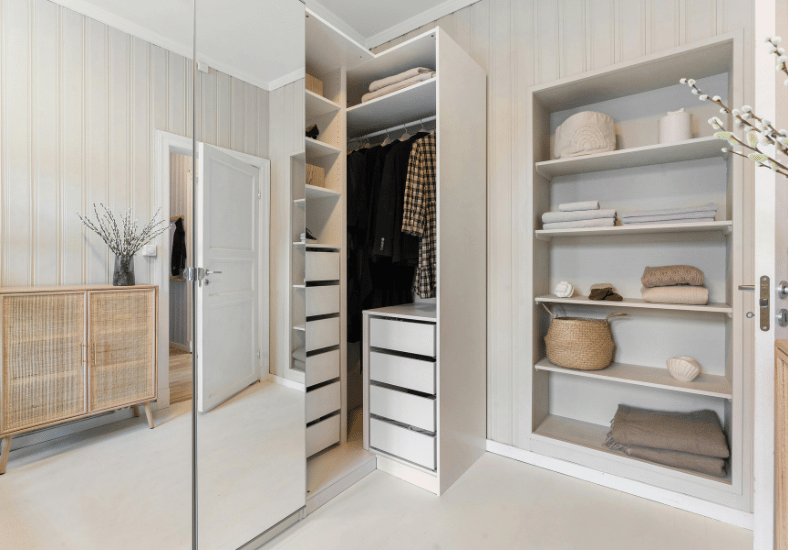
Wardrobe design is about more than where you hang your shirts. It shapes how smoothly you get ready, how tidy your bedroom feels and how much use you get from the clothes you already own. When your wardrobe is not quite right, you feel it every single morning.
The shift from cooler months into warmer weather is a handy time to notice what is not working. Swapping jumpers for shorts often exposes tired wardrobe layouts, cluttered corners and doors that never quite open the way you need. Before the next summer rush hits, it is worth questioning the old quick fixes — "just add another shelf" or "squeeze in more hanging space" — because these can actually make daily dressing harder, not easier.
At Cutting Edge Cabinetry, we see wardrobe design as part of a whole home — not just a box with a rail in it. As a Pukekohe-based custom cabinetry specialist and cabinet maker, our approach is tailored and New Zealand-made, shaped around how Kiwis really live — from busy family mornings in Pukekohe to relaxed weekends across Auckland and Waikato.
Are Your Wardrobe Doors Holding Back Your Space?
Wardrobe doors seem simple, but they change how you move in a room. The wrong style can steal space, block light and make you work harder just to grab a T-shirt.
Sliding, hinged and open-front wardrobe designs all behave differently:
- Sliding doors save floor space but only open one side at a time
- Hinged doors give full access but need clear space to swing open
- Open-front designs feel airy and modern but demand you keep things tidy
In smaller Auckland bedrooms or compact Waikato builds, a wide hinged door can clash with the bed, a window or a small home office nook. If you have to shuffle sideways every time you open a wardrobe door, the layout is not doing its job.
Material and finish choices also matter in wardrobe design. High-gloss white might look sharp in a show home, but in a busy house with kids and pets, fingerprints can drive you mad. Textured melamine or timber-look finishes hide daily marks and link nicely with other custom cabinetry nearby. When wardrobe door profiles and colours echo your kitchen cabinets or hallway cabinetry, the whole home feels more considered and calm.
The Hidden Cost of Poor Wardrobe Design
A wardrobe that is not thought through costs you more than floor space. It costs you time, energy and sometimes even good clothes that never see the light of day.
Common signs of poor wardrobe design include:
- Overstuffed drawers that you have to wrestle shut
- Dark corners where clothes vanish for months
- Shoes piled on the floor in a messy mound
- One long hanging rail with wasted space below
Generic wardrobe modules often ignore the real shape of your room. Renovated homes and coastal properties around Auckland and Waikato can have awkward corners, sloped ceilings or extra-high studs. Off-the-shelf units rarely reach the ceiling, leaving dead space that gathers dust instead of storing winter bedding or luggage.
This inefficiency spreads through the rest of the house. When you cannot see everything clearly, you wear the same few outfits on repeat while the rest sits crumpled at the back — more rewashing, more clutter on chairs and floors, more "I have nothing to wear" moments. A smart wardrobe design breaks that cycle by giving every item a clear, easy-to-reach home. It is the same storage-first thinking that shapes our laundry design and entertainment cabinetry projects across Auckland and Waikato.
Wardrobe Design Built for You, Not a Show Home
A good wardrobe should fit your life — not just a magazine photo. That starts with being honest about how you really live, not how you think you "should" live.
Our Pukekohe cabinet makers like to think about:
- Do you need fast access to gym gear every morning?
- Are there school uniforms and sports kits to separate from weekend clothes?
- Is there bulky tradie workwear that needs strong hanging and deep shelves?
- Do you work from home and store office items in the bedroom?
By planning wardrobe design around real routines, we can divide space so that daily items sit at eye level, special-occasion pieces sit slightly higher and rarely used items move to the top. Seasonal rotation becomes simple when high-shelf boxes, pull-down hangers and corner units are designed into the layout from the start.
Wardrobes should not sit in isolation either. When wardrobe design links with the laundry design and even a home office storage plan, storage across the whole home flows better. A tall section for laundry baskets beside hanging space can make wash day smoother, or a shared cupboard between a bedroom and study can tuck away both clothes and documents without wasting space.
Smart Wardrobe Design Features Many Homeowners Regret Skipping
The inside of the wardrobe is where the real magic happens. Too often, people focus on doors and finishes, then accept a basic rail and a couple of shelves. Later, they wish they had thought harder about the interior.
Clever custom cabinetry inclusions that pay off every single day include:
- A balanced mix of short and long hanging rails
- Deep drawers for T-shirts and folded knitwear
- Open shelves for bags and baskets
- Dedicated shoe storage instead of a floor pile
Lighting is another common wardrobe design regret. A simple LED strip or sensor light can transform the feel of a wardrobe — especially in darker Auckland or Waikato bedrooms or during early mornings. Built-in power points are handy for a clothes steamer, hair tools or charging accessories, keeping cords off the bedroom floor.
Small fittings do big work too. Pull-out mirrors, jewellery inserts in drawers, tie and belt racks, and strong soft-close hardware all help your wardrobe stand up to daily New Zealand family life. These details are hard to add later — so they are worth planning from the outset, just as we plan them into every kitchen cabinet installation we deliver.
Wardrobe Design Style That Lasts Longer Than a Trend
Wardrobes might not be the first thing guests notice, but you see them every day. Choosing finishes that hold up over time is just as important as getting the wardrobe layout right.
Our Pukekohe-based team often looks at:
- How wardrobe cabinetry finishes can echo your kitchen and laundry design
- Timber tones that feel warm without dating quickly
- Neutral paint colours that work with changing linen and décor
- Simple handles that feel good in the hand and are easy to clean
In busy Auckland households or coastal Waikato homes where salt air and sand are part of life, sturdy New Zealand-made materials and solid craftsmanship make a real difference. Surfaces that wipe clean easily, edges that do not chip at the first knock, and hardware that keeps working after thousands of openings all help your wardrobe stay good-looking and useful for many years.
When your wardrobe design is planned as part of a full home fitout — alongside kitchen cabinets, laundry and home office storage — everything feels more pulled together. Bedrooms link with hallways and living spaces, and the whole house works harder for you instead of fighting back. For businesses needing the same level of finish and function in their spaces, we offer commercial fitout cabinetry across Auckland and Waikato too.
Get Started With Your Wardrobe Design Project Today
If you are ready to upgrade your bedroom storage, explore our tailored wardrobe design solutions and see how Cutting Edge Cabinetry can transform your space. Based in Pukekohe and serving homes across Auckland and Waikato, our cabinet makers and kitchen designers work closely with you to create wardrobes that suit your home, lifestyle and budget. We also design and install kitchen renovation services, laundry design and commercial fitout cabinetry — so if you are planning a wider home refresh, we can coordinate everything. Share your ideas, photos or plans and we will help shape them into a practical, stylish result. To book a consultation or ask a question, simply contact us today.
.png)
.png)